
Schools and kids
Count it. Swap it. Prove it.
Free, checked, curriculum-mapped plastic resources for ages 5 to 18, made by people who show their sources.
Plastic is brilliant stuff: light, strong, waterproof and cheap. The trouble is that we make things designed to last for decades and use them for ten minutes, and only about 9% of the world’s plastic waste actually gets recycled (Organisation for Economic Co-operation and Development (OECD), 2019 figures). The good news is that this is one of the most fixable problems on the planet, and children are unusually good at fixing it. Every tool on this page ends in a number and a change you can see: a class count, a swap that sticks, a letter that gets a reply. Every fact comes with its source. Every resource says who made it and who paid for it.
Start here by age
Ages 5 to 7: material detectives
Start with the read-aloud story “Where does my plastic go?” (Bob the Bottle’s four journeys), then the 45-minute lesson “What is plastic, and where does it belong?”, which sorts, tests and decides what we use once and what we use again and again. Add the picture tally at the end of the Classroom Plastic Audit. Mapped to England Year 1 and 2 Everyday materials, Next Generation Science Standards (NGSS) K-2 and the Australian Curriculum Foundation to Year 2.
30-day Swap Challenge: day-by-day tracker
One swap a week for four weeks plus a wild-card, with daily ticks, weekly ‘did it stick?’ checks and grams avoided at…
Australian Marine Conservation Society: ocean plastic pollution posters
Free print-at-home A4 and A3 educational and values posters (‘Plastics are forever’) for classrooms and community groups.
Classroom plastic audit (ages 8–18, with a picture tally for 5–7)
A one-week, 12-category count of a class’s single-use plastic with a published weights table, the sums, and a three-swap action plan.
Clean Up Australia: Education Hub and Schools Clean Up Day
Educator’s guide, Australian Curriculum lessons, a school planning toolkit and the annual Schools Clean Up Day for F–Year 10.
Common Seas Education: Ocean Plastics Academy lesson packages
The most complete UK-curriculum plastics package: full lesson packs for ages 5–16 in Science, Geography, design and technology (D&T) and Citizenship, delivered…
Eco-Schools: Litter and Waste theme and Litter Less lesson plans
Global Green Flag programme lesson plans (ages 6–16, in four languages) built around the Seven-Step Eco-Schools method.
Ages 8 to 11: the lunchbox investigation
Read the ages 8 to 11 explainer, run the 45-minute lunchbox lesson that turns a week’s count into grams a year and three swaps, and send home the “Convince your parents” cards. Try the bag-strength or eight-week degradation science-fair experiment. Mapped to England Year 4 to 6 Science and Geography, NGSS 5-ESS3-1 and 3-5-ETS1, and Australian Curriculum Years 3 to 6.
30-day Swap Challenge: day-by-day tracker
One swap a week for four weeks plus a wild-card, with daily ticks, weekly ‘did it stick?’ checks and grams avoided at…
5 Gyres: Trash Academy video series and TrashBlitz app
Two seasons of short YouTube episodes (English and Spanish) and a community-science litter-logging app.
Australian Marine Conservation Society: ocean plastic pollution posters
Free print-at-home A4 and A3 educational and values posters (‘Plastics are forever’) for classrooms and community groups.
Classroom plastic audit (ages 8–18, with a picture tally for 5–7)
A one-week, 12-category count of a class’s single-use plastic with a published weights table, the sums, and a three-swap action plan.
Clean Up Australia: Education Hub and Schools Clean Up Day
Educator’s guide, Australian Curriculum lessons, a school planning toolkit and the annual Schools Clean Up Day for F–Year 10.
Common Seas Education: Ocean Plastics Academy lesson packages
The most complete UK-curriculum plastics package: full lesson packs for ages 5–16 in Science, Geography, design and technology (D&T) and Citizenship, delivered…
Ages 12 to 14: why is it only 9%?
The 60-minute chemistry lesson on plastic as a limited resource, resin codes and real recycling data ends with pupils designing a way to measure their own school’s waste. Pair it with Oak National Academy’s Key Stage 3 (KS3) Geography lesson, the TED-Ed animation, and the laundry-microfibre experiment. Mapped to England KS3 Chemistry (Earth and atmosphere), NGSS MS-ESS3-3 and MS-ESS3-4, and Australian Curriculum Years 7 to 9.
30-day Swap Challenge: day-by-day tracker
One swap a week for four weeks plus a wild-card, with daily ticks, weekly ‘did it stick?’ checks and grams avoided at…
5 Gyres: Trash Academy video series and TrashBlitz app
Two seasons of short YouTube episodes (English and Spanish) and a community-science litter-logging app.
Algalita Wayfinder Society: Next Generation Science Standards (NGSS) MS-ESS3-3 ‘Plastic Ocean’ lesson and student hub
Research-grounded middle and high school lessons, toolkits and a youth summit from the institute behind the original gyre research.
Australian Marine Conservation Society: ocean plastic pollution posters
Free print-at-home A4 and A3 educational and values posters (‘Plastics are forever’) for classrooms and community groups.
Classroom plastic audit (ages 8–18, with a picture tally for 5–7)
A one-week, 12-category count of a class’s single-use plastic with a published weights table, the sums, and a three-swap action plan.
Clean Up Australia: Education Hub and Schools Clean Up Day
Educator’s guide, Australian Curriculum lessons, a school planning toolkit and the annual Schools Clean Up Day for F–Year 10.
Ages 15 to 18: does a bag for life actually help?
Life-cycle assessment with real Environment Agency data, break-even maths, and an evaluation of bag charges and deposit return schemes. Extend with The Story of Plastic, the Ellen MacArthur Foundation’s circular design lessons and TeachEngineering’s Plastisphere labs. Mapped to General Certificate of Secondary Education (GCSE) and A-level Chemistry, Geography and Economics, NGSS HS-ESS3-4 and HS-ETS1-3, International Baccalaureate (IB) Environmental Systems and Societies (ESS) and the Australian senior curriculum.
30-day Swap Challenge: day-by-day tracker
One swap a week for four weeks plus a wild-card, with daily ticks, weekly ‘did it stick?’ checks and grams avoided at…
5 Gyres: Trash Academy video series and TrashBlitz app
Two seasons of short YouTube episodes (English and Spanish) and a community-science litter-logging app.
Algalita Wayfinder Society: Next Generation Science Standards (NGSS) MS-ESS3-3 ‘Plastic Ocean’ lesson and student hub
Research-grounded middle and high school lessons, toolkits and a youth summit from the institute behind the original gyre research.
Australian Marine Conservation Society: ocean plastic pollution posters
Free print-at-home A4 and A3 educational and values posters (‘Plastics are forever’) for classrooms and community groups.
Classroom plastic audit (ages 8–18, with a picture tally for 5–7)
A one-week, 12-category count of a class’s single-use plastic with a published weights table, the sums, and a three-swap action plan.
Common Seas Education: Ocean Plastics Academy lesson packages
The most complete UK-curriculum plastics package: full lesson packs for ages 5–16 in Science, Geography, design and technology (D&T) and Citizenship, delivered…
For teachers
Codes on the page, licences you can use, and honesty about who paid
We built these because teachers told us three things were missing: curriculum codes printed on the page (most packs say “aligned” and leave you to guess), materials you are actually allowed to adapt (almost everything is all-rights-reserved), and honesty about provenance. A September 2026 investigation by Grist and the Hechinger Report found plastics-industry bodies supplying free lesson plans to schools that play down the harms (Grist). So:
- Curriculum codes printedEngland National Curriculum wording, NGSS codes and Australian Curriculum v9 codes (marked “verify” where v9 numbering should be checked before printing), plus IB links.
- CC BY 4.0Copy it, change it, share it, credit us.
- Built only from open sourcesUS National Oceanic and Atmospheric Administration (NOAA) public-domain curriculum, Oak National Academy and Zero Waste Scotland (Open Government Licence), TED-Ed and Story of Stuff shorts (Creative Commons). Everything else is linked, not copied.
- Provenance on every linkEvery external resource states who made it and who funded it. We do not list materials from plastics-industry bodies, however well produced.
- No logins, no pupil dataThe audit and calculator keep data in your own browser; nothing about pupils is sent to us.
Start with the Classroom Plastic Audit (ten minutes a day for a week), teach the lesson for your age band, run the Swap Challenge, count again at the end of term, and post your pledge. That sequence matches the Plastic Free Schools “three items” target and the Plastic Clever Schools “evidence, investigate, act” steps, so your evidence transfers. Plastic Free July™ also runs a free Schools Challenge for primary schools. Sign up on the Plastic Free July website.
Print it. A one-page summary for the staffroom, and a classroom poster on why only 9% of plastic waste gets recycled. Every figure in them names its source, and the same figures are on this site with links to the original studies. All free printables.
For kids
Convince your parents
Grown-ups are busy, and “we should use less plastic” is easy to nod at and forget. What works is a specific ask, a real fact you can back up, and an offer to do some of the work yourself. That is what the twelve “Convince your parents” cards are: things like “Can we buy the big bag instead of ten little packets?” with the evidence in one sentence (and where it came from), a reply for when they say “but the little ones are handy”, and a small thing your family can try this week. Pick one card a week. You will not win every time. You will win more than you expect. And when you get a “yes”, tick it on the Swap Challenge so it counts.

Science fair
Three experiments that need no lab
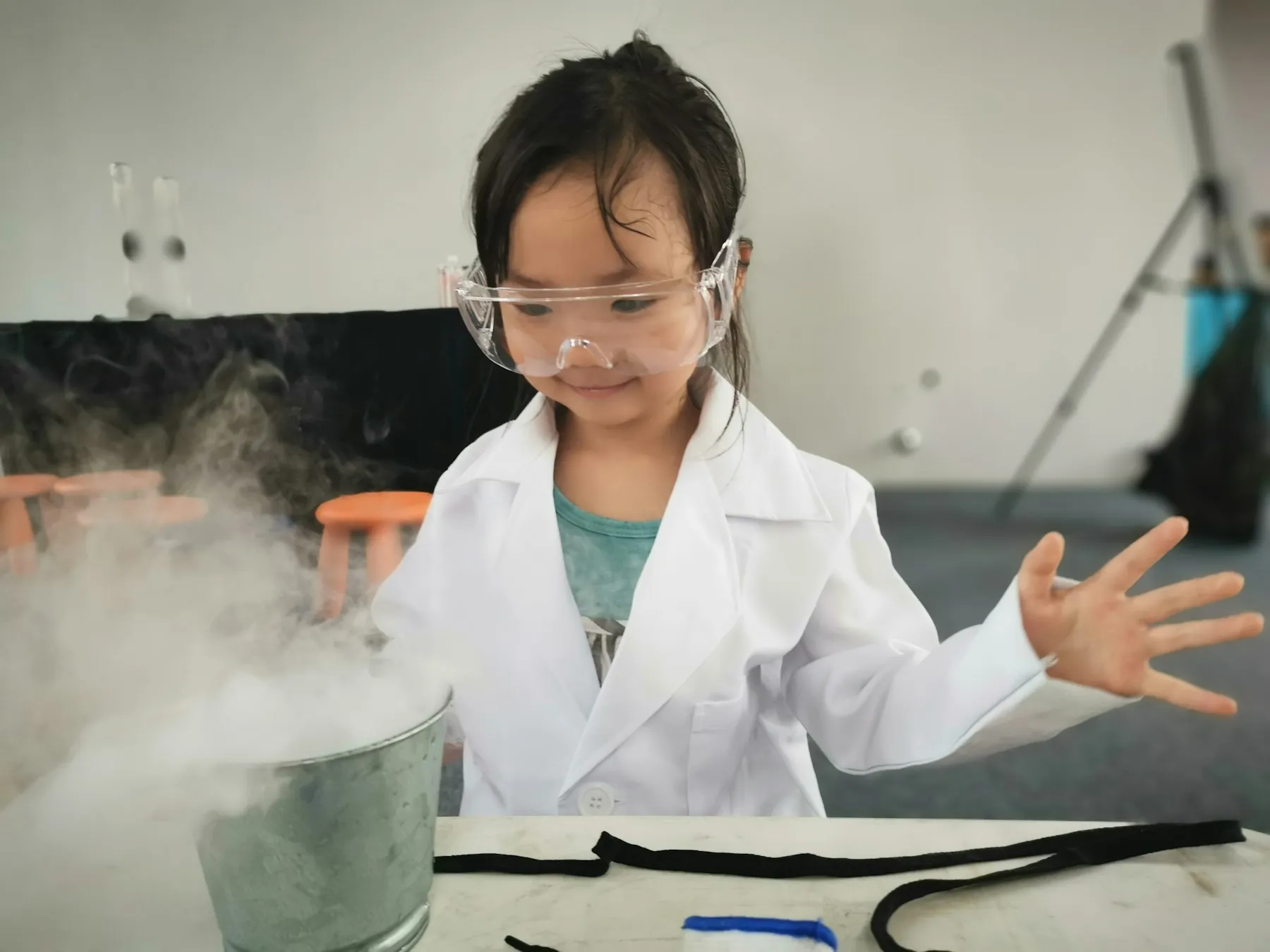
Good science-fair projects on plastic do not need a laboratory; they need a fair test, a data table and an honest conclusion. We have written up three you can run at home or in school, each with the question, a hypothesis, the variables, a step-by-step method, safety notes, analysis questions and curriculum codes: which shopping bag is strongest per gram (and why that is not the whole story), how many fibres come off a fleece in the wash, and what actually happens to plastic, paper and “compostable” packets over eight weeks in soil, water and sunlight. The last one lets you test a famous claim (“plastic takes 450 years to break down”) that turns out to have no measured source.
Six facts you can trust
And repeat
- Only about 9% of the world’s plastic waste gets recycled. That was the global figure in 2019, which is why “use less” beats “recycle more”. (OECD)
- Between 19 and 23 million tonnes of plastic went into rivers, lakes and seas in 2016. A big number, but a counted one, and it can come down. (Borrelle and others, Science, 2020)
- More than 1,000 rivers carry 80% of the plastic that reaches the sea from rivers, and most are small rivers through towns. So your local stream matters. (Meijer and others, Science Advances, 2021)
- 914 kinds of sea animal have been found with plastic inside them or tangled in it. From turtles to seabirds to whales. (Kühn and van Franeker, 2020)
- A small charge cut single-use bag sales at England’s main supermarkets by 98%. From 7.6 billion bags in 2014 to 126 million in 2025-26. Small changes, done by everyone, work. (UK Government)
- Reuse, better recycling and new materials could cut plastic pollution by 80% by 2040 with tools we already have. Reuse is the biggest single lever, and it is the one families and schools control. (UN Environment Programme (UNEP), 2023)
Some famous plastic “facts” do not hold up: the credit-card-a-week one, the “more plastic than fish by 2050” one, the “450 years” one. We leave them out, and we show children how to spot them.
Watch
Films for the classroom
Microplastic Madness (fifth-graders take on their city, ages 8–14), TED-Ed’s animated explainers (5 minutes, Creative Commons), The Story of Plastic with its free study guides (15+), and The Plastic Country for Australian classes.
Ready when you are
Count your class’s plastic this week. Teach one lesson. Try one swap for 30 days. Then tell us your number in the community.